






When Employees Get Jealous
Jealous employees can quietly drain the strength out of a team. Instead of focusing on their own performance, they fixate on who got the praise, the promotion, or the plum assignment. That envy often turns into gossip, resentment, and passive resistance that slows everyone down. Managers must address it early. Redirect jealous energy toward personal growth, reinforce clear standards, and shut down comparisons before they take root. A healthy workplace isn’t built on rivalry. It’s built on accountability, confidence, and employees who chase improvement instead of each other. In this Management Micro-Learning video, Glenn explains how to handle it.
Span of Control (The Octopus Principle)
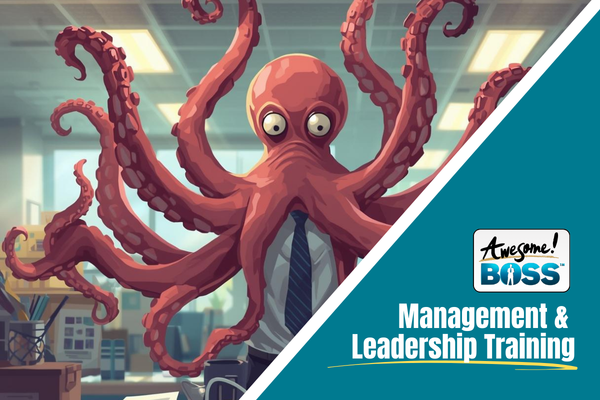
Want to know how many people you can supervise before losing control (or your sanity)? It’s smaller than you think — and it changes everything. In this Management Micro-Learning video, Glenn shows how to handle it.

"That's Not in My Job Description"
Here’s a sentence every manager dreads… and the best way to shut it down professionally. (Hint: Never respond 'Well it is now".) In this Management Micro-Learning video, Glenn explains how to handle it.

Camping Out in the Restroom
Some employees have discovered a new hiding place: the restroom. What starts as a “quick break” turns into a quiet campsite where productivity goes missing. It’s the workplace equivalent of disappearing into the woods with no forwarding address. The problem isn’t the bathroom itself. It’s the pattern — avoiding work, dodging accountability, and signaling to the rest of the team that standards are optional. When restrooms become retreat zones, morale takes the hit. Clear expectations, consistent follow-through, and a little daylight on the behavior bring everyone back to reality. The restroom is for breaks, not for setting up base camp. Managers who address it early keep the culture healthy and the workflow moving. In this Management Micro-Learning video, Glenn explains how to handle it.
How to Get People to Step Out of Their Comfort Zone
Most people treat their comfort zone like sacred ground, but in the workplace, it’s more like quicksand. Stay there too long and nothing moves except the opportunities passing you by. Growth happens in the stretch: the tough conversation you’d rather postpone, the new skill you’re not sure you can master, the challenge that makes your stomach do cartwheels. Discomfort isn’t a threat; it’s a signal that you’re leveling up. The employees who rise — and the managers who lead — are the ones willing to step into the unfamiliar and let it sharpen them. Comfort keeps you safe. Discomfort keeps you advancing. In this Management Micro-Learning video, Glenn shows how to handle it.

Tardiness & Fairness
When one employee drifts in late, the whole team sees it — especially the people who show up on time without fail. When managers let it slide, they end up rewarding the wrong behavior and shortchanging the dependable employees who keep the place running. That’s why consistency matters. Clear expectations, tracked patterns, and real follow-through protect both morale and culture. Occasional lateness is life. Chronic lateness is a trust leak. Fairness isn’t a feel-good phrase. It’s a leadership requirement. In this Management Micro-Learning video, Glenn shows how to handle it.
When Employees Give You Ultimatums
Managers cannot — and will not — run a workplace by ultimatum. When two employees threaten to quit if a troublesome coworker is finally held accountable, that’s not loyalty. It’s leverage. And the moment a boss gives in, the entire chain of command collapses. Standards crumble, performance erodes, and the loudest voices start running the show. A healthy workplace has one leader, not a committee of hostage-takers. Employees are free to stay or go, but they don’t get to dictate discipline. A manager’s job is to protect the culture, not to negotiate with threats. In this Management Micro-Learning video, Glenn shows how to handle it.

Praise in Public
Public praise is rocket fuel. It shows people their effort matters, their excellence counts, and that showing up strong pays off. Praise in public, and you elevate the performer, the culture, and the bar for everyone watching. One moment of recognition turns into momentum. Energy rises, morale wakes up, and the whole team leans toward higher standards. A private thank-you is good. In this Management Micro-Learning video, Glenn shows how to handle it.

"Praise Fatigue"
Too much praise, given too loosely, loses its punch. When every small task earns a standing ovation, employees stop hearing the applause. That’s praise fatigue. It dilutes motivation, blurs standards, and leaves high performers wondering why excellence is treated the same as the bare minimum. Real praise should be earned, specific, and tied to meaningful work. When managers reserve recognition for moments that truly merit it, the encouragement lands with weight instead of blending into background noise. The goal isn’t more praise. It’s credible praise. In this Management Micro-Learning video, Glenn shows how to handle it.
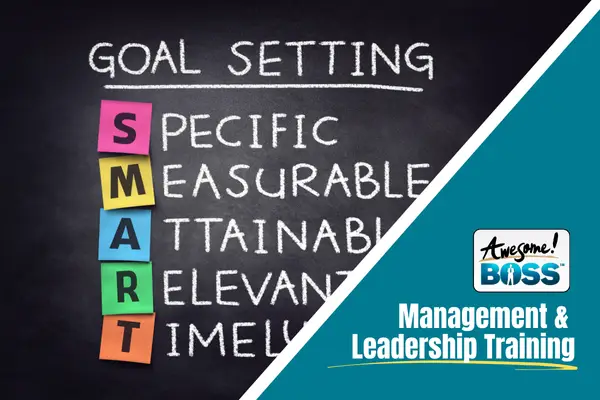
Goal Setting
Goal setting is one of the strongest tools in a manager’s kit — and one of the easiest to misuse. Clear goals give employees direction, purpose, and a finish line worth running toward. They boost focus, sharpen priorities, and create measurable progress everyone can see. But goals can backfire when they’re vague, unrealistic, or piled on without support. Poorly designed goals create stress instead of motivation and push employees into checking boxes instead of doing meaningful work. The key is thoughtful goal setting: specific, attainable targets that challenge without overwhelming. Done right, goals ignite performance. Done wrong, they smother it. In this Management Micro-Learning video, Glenn shows how to handle it.

Firing in a Tight Labor Market
Firing in a tight labor market feels risky, but keeping the wrong employee is far more expensive. When standards slip, morale drops, productivity drags, and your best people start questioning why they should work harder than the person coasting beside them. A tight labor market doesn’t change a manager’s responsibility: protect the culture, protect the team, and protect the business. Sometimes that means making the tough call, even when replacements are scarce. The truth is, a vacancy is easier to manage than an anchor. The right hire will come, but first you have to clear the space. In this Management Micro-Learning video, Glenn shows how to handle it.

Doormat vs Authoritarian
Managers usually fall off the leadership path in one of two directions: they become a doormat or a dictator. The doormat avoids conflict, softens every boundary, and ends up being walked over by the very people they’re supposed to lead. The authoritarian swings the other way, ruling by fear, barking orders, and crushing initiative in the process. Neither style works. Effective leadership lives in the middle: firm, fair, and confident. Strong enough to hold the line, steady enough to listen, and wise enough to know that respect always outperforms intimidation or submission. In this Management Micro-Learning video, Glenn shows how to handle it.

Does Money Motivate People?
Money gets people in the door, but it doesn’t keep them fired up. A raise can spark short-term excitement, but the boost fades fast if the work environment is toxic, the manager is weak, or the job feels meaningless. People want fair pay, yes — but they stay motivated by recognition, growth, trust, and the chance to do work that matters. Money is a motivator, but it’s not the motivator. If compensation is the only thing driving performance, you don’t have a motivated team… you have a rented one. In this Management Micro-Learning video, Glenn shows how to handle it.

Breaking Chain of Command
When employees break the chain of command, they don’t just skip a step — they weaken the entire structure. Going around a supervisor might feel quicker, but it undermines authority, breeds confusion, and turns simple issues into political ones. A healthy workplace runs on clarity: everyone knows who to report to, who to escalate to, and how communication should flow. When that order is ignored, chaos takes over. Enforcing the chain of command isn’t about ego. It’s about keeping decisions clean, roles respected, and the organization working the way it was designed to. In this Management Micro-Learning video, Glenn explains how to handle it.
Vacation
What’s the most important career benefit of taking vacations? Surprisingly, it’s not to rest, relax, or avoid burnout. In this Management Micro-Learning video, Glenn explains why.

Delegate Your Way to Success - Part 1
Drowning in tasks? You’re not overloaded… you’re under-delegating. In this video, Glenn shows you how to let go of tasks without losing control and create a business that runs smoothly even when you’re not standing in the middle of every problem. Delegation isn’t a luxury. It’s what turns a hard-working manager into a true leader. In this Management Micro-Learning video, Glenn explains how to handle it.
Delegate Your Way to Success - Part 2
Trying to do everything yourself is the fast lane to burnout. Glenn teaches new and frontline managers exactly how to hand off work, follow up without micromanaging, and build employees who can stand on their own. You’ll walk away with practical scripts, simple tools, and a new level of confidence in leading people instead of carrying them. In this Management Micro-Learning video, Glenn explains how to handle it.

Delegate Your Way to Success - Part 3
Stop carrying the whole team on your back.
Glenn shows new and frontline managers how to delegate with clarity, follow up without hovering, and develop employees who actually own their work. You’ll get practical scripts, plug-and-play tools, and the confidence to lead a team that stands tall without you holding every piece together. In this Management Micro-Learning video, Glenn explains how to handle it.
Delegate Your Way to Success - Part 4
Step out of burnout mode and into real leadership.
Learn how to delegate with precision, maintain oversight without micromanaging, and develop employees who operate independently. Walk away with practical tools and a leadership presence that frees you to focus on the work that truly matters. In this Management Micro-Learning video, Glenn explains how to handle it.

You're Not Your Employees' Friend
Managers often stumble when they forget one simple truth: you’re not your employees’ friend. Friendship blurs lines, softens accountability, and turns every correction into an emotional negotiation. Your team doesn’t need a buddy. They need a leader who is fair, consistent, and strong enough to make the hard calls without worrying about being liked. Respect lasts longer than popularity, and boundaries build healthier teams than buddy-relationships ever will. When you stop trying to be their friend, you finally become the leader they actually need.